
The 5 “Helpful” Things That Make Dog Separation Anxiety Worse (Stop #3 Now)
If your dog panics when you leave, destroys things, or howls like the world is ending—and you’re doing everything the internet says—you’re not alone.
Many caring dog owners come to the same quiet, uncomfortable question:
“Am I actually making this worse?”
The answer is often yes, but not because you’re negligent or doing anything cruel. In fact, it’s usually the opposite. Many well-meaning strategies accidentally intensify dog separation anxiety by reinforcing fear at exactly the wrong moments.
This article is a diagnostic checkpoint. Not a lecture. Not blame.
Just clarity.
Below are five extremely common, “helpful” behaviors that often make separation anxiety worse—and what to do instead. If you recognize even one of these, you’ve just found your leverage point.
1. Giving Extra Affection Right Before You Leave
This one feels loving. It feels humane.
You hug your dog, talk in a soft voice, maybe say “It’s okay, I’ll be back soon” before walking out the door.
Here’s the problem:
Dogs don’t process reassurance the way humans do.
To an anxious dog, your emotional send-off often signals “Something bad is about to happen.” Your tone, body language, and lingering attention become a powerful pre-departure trigger.
Instead of calming them, it sharpens their anticipation of panic.
What to do instead:
Neutralize departures. Calm, boring, predictable exits are safer for anxious dogs than emotional ones. This is one of the first things identified during a proper Trigger Audit, where subtle cues like tone, pacing, and timing are mapped and adjusted.
2. Waiting Until Your Dog Is Calm to Leave
This sounds logical, even responsible.
“I’ll wait until they settle down, then I’ll go.”
Unfortunately, this often backfires.
What your dog learns is:
👉 “My distress controls whether my person stays.”
That means anxiety becomes a tool. The dog escalates—not consciously, but neurologically—because heightened stress has worked before.
This creates a feedback loop where calm is no longer self-regulated; it’s conditional.
What to do instead:
Departures should follow structure, not emotional state. This doesn’t mean leaving during a full meltdown—it means removing the idea that anxiety influences your behavior. This distinction is subtle and critical, and it’s often clarified using a Doorway Checklist to standardize exits.
3. Using Food Toys Only When You Leave (Stop This Now)
This is one of the most damaging myths.
Stuffed Kongs. Lick mats. Puzzle feeders.
Only given when you leave.
At first, it seems to help. Then… it doesn’t.
Here’s why:
If food enrichment only appears before separation, it becomes a predictor of absence, not a distraction from it.
Many anxious dogs stop eating the moment the door closes. Others fixate on the toy, finish it fast, and then spiral harder than before.
You didn’t create a positive association.
You created a countdown timer.
What to do instead:
High-value enrichment must exist independently of departures. A proper Trigger Audit often reveals whether food is soothing or stimulating for your specific dog—and when it should (or shouldn’t) be used.
4. Practicing Long Absences Too Soon
You might be told:
“They just need to get used to it.”
So you try leaving for 30 minutes. Or an hour. Or half a workday.
But for dogs with separation anxiety, this isn’t exposure—it’s flooding.
Once panic hits a certain neurological threshold, learning shuts down. The dog isn’t practicing being alone; they’re rehearsing fear.
Every full-blown panic episode strengthens the anxiety pathway.
What to do instead:
Progress must stay below panic level. That threshold is different for every dog and must be identified intentionally. This is another place where a Trigger Audit matters—guessing here often delays progress by months.
5. Assuming It’s “Just Behavioral”
This is the quiet one.
You might think:
“They’re being dramatic”
“They’ll grow out of it”
“They’re just attached”
But separation anxiety is not disobedience or stubbornness. It’s a panic response, often tied to predictability, attachment patterns, and environmental cues—not dominance or training gaps.
When treated like a simple behavior problem, owners unintentionally apply pressure where safety is needed.
What to do instead:
Shift from correction to analysis. Anxiety reduces when triggers are identified, sequences are adjusted, and exits become emotionally neutral—not when dogs are pushed to “cope.”
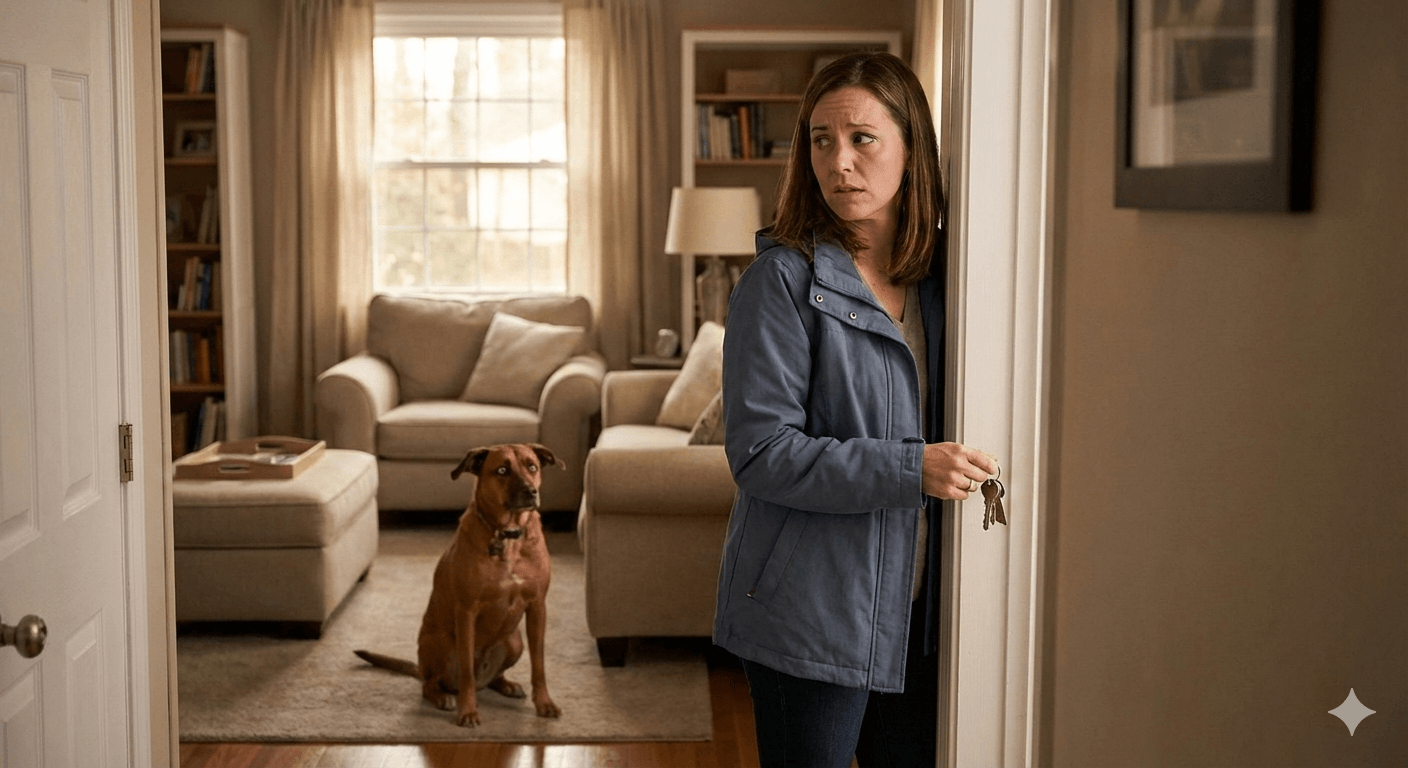
So… Are You Doing It Wrong?
If you recognized yourself in this list, the answer isn’t failure.
It’s misalignment.
Most separation anxiety plans fail not because owners don’t try hard enough—but because they focus on what to do instead of when and why.
That’s why tools like a Trigger Audit (to identify the exact cues escalating anxiety) and a Doorway Checklist (to standardize exits without emotional spikes) work so effectively. They remove guesswork and replace it with structure.
No guilt.
No forcing.
Just clarity.
Next Step
If this article made you pause and think “Oh… that might be us”, that’s a good thing. Awareness is the turning point.
Avoid these five mistakes, adjust the sequence—not just the strategy—and you’ll stop reinforcing the very anxiety you’re trying to fix.
You’re not doing nothing wrong.
You’re just ready to do it right.
SHARE


Subscribe now.
Sign up for our newsletter to get the most interesting stories of the day straight to your inbox before everyone else
CATEGORIES
Created with ©systeme.io• Privacy policy • Terms of service